(Adapted from an email sent from OC Transpo staff to City Council)
O-Train Line 1 operations
On Thursday, January 22, Line 1 operated with a mixture of single-car trains and double-car trains with no major crowding reported at stations. There were large volumes of customers on trains, but no unsafe overcrowding was reported. Staff continue to be at key stations, and the Transit Operations Control Centre is monitoring the system in real time and making adjustments where possible.
In response to observations from yesterday’s service, OC Transpo has adjusted its operating plans today to increase train frequency to every three to four minutes to help keep customers moving and reduce crowding during the busiest times. During this morning’s peak period, we observed that the increased frequency helped clear station platforms.
Line 1 service over the weekend will continue to operate as normal with trains every 10 minutes. Lines 2 and 4 are not affected by this issue and continue to operate normally.
Spalling issue action plan
From an operational perspective, there are two streams of parallel work underway to address the spalling issue. This includes:
1. Work on vehicles with Cartridge Bearing Assemblies (CBA) over 100,000km:
• Rideau Transit Group (RTG) advised they have begun replacements of CBAs.
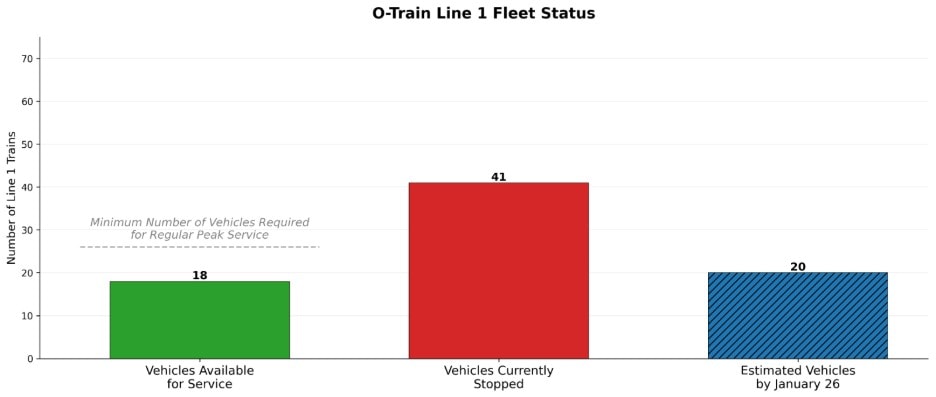
• As shown in the table below, there are 18 vehicles currently available for service with 41 vehicles that require CBA replacements.
• This process is being done strategically to ensure that we are maximizing the mileage of vehicles in service.
2. Monitoring and analysis:
• RTG has advised that they plan to hire an outside consultant to provide additional expertise on bearings and monitoring techniques. Additionally, RTG is engaging its subcontractor, Alstom’s, bearing experts in France as part of their analysis.
• Further investigations of multiple CBAs are underway as part of the root cause analysis.
• In parallel, RTG continues to investigate other measuring and monitoring tools that may provide early detection of wear of the cartridge bearing assembly, including spalling.
We continue to work with RTG to confirm vehicle availability for next week. Based on the current information available, it is estimated that 20 vehicles will be available for service on Monday, January 26. This situation remains fluid, and we are working with RTG on long-term fleet management plans. OC Transpo is monitoring the transit system closely and is in regular contact with RTG to be ready to integrate additional vehicles into service as soon as possible.
We will continue to provide updates on this situation. A media availability will be hosted later today and will be available to watch on the City’s YouTube channel. In addition, we will be hosting a technical briefing early next week to provide more information.
Bus Service Delivery
The week of January 11 to January 17 saw an overall improvement in the number of buses available for service and a decrease in cancelled trips. While this is a positive improvement, work continues to ensure we can consistently deliver the service customers expect.
The results for January 11 to January 17 show that:
• Bus service delivery was on average 95.1%
o When excluding January 14 to January 16 due to severe winter weather bus service delivery was 96.1%.
• 5% of scheduled trips were not delivered, on dates that were not affected by severe weather.
• On average, 498 buses were available every weekday, with an average weekday requirement of 500. This is a temporary decrease from 520 buses required while fleet availability improves.
Additional KPIs are attached to this email and published on octranspo.com. As mentioned previously, we continue to work closely with our frontline staff to help provide buses for service and are leveraging external vendors to complete repairs and inspections, whenever possible. Our team also continues to investigate options to bolster our existing fleet with used buses. Every action is being done to ensure that the number of buses available for service is maximized and to continue to improve overall bus fleet availability.
We thank customers for their patience, and we continue to focus on stabilizing service. The next update on the bus key performance indicators will be shared on January 30 via email and on octranspo.com.
Original signed by Troy Charter
Bus Service Delivery Action Plan Key Performance Indicators
Daily Bus Service Delivery:
Weekly average service delivery was 95.1%, 4.4% lower than target. When excluding January 14 to January 16 due to severe winter weather, bus service delivery was 96.1%.
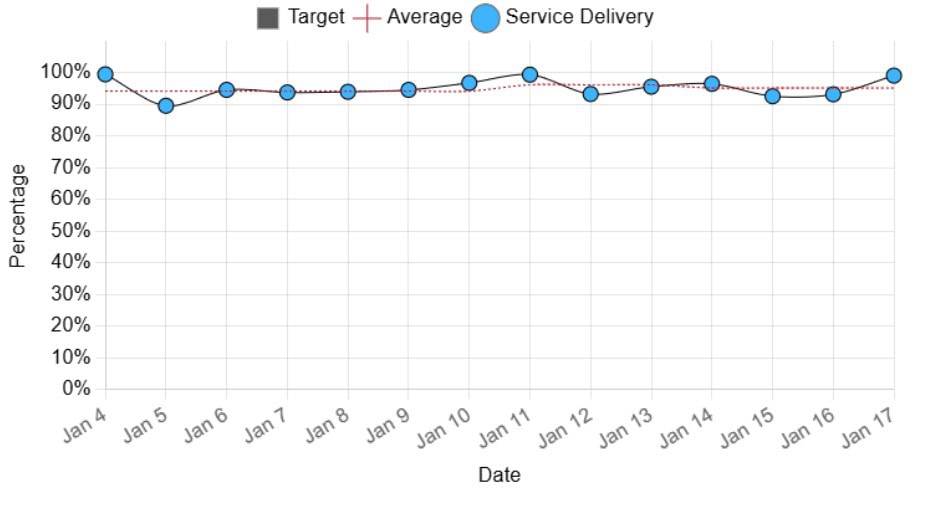
This is a measure of the number of bus service hours delivered compared to the planned number of hours delivered. A decrease in the number of trips undelivered will show an increase in the weekly average bus service delivery.
Daily Undelivered Trips
There were 2,330 trips not delivered, representing 5% of the 45,342 trips scheduled.
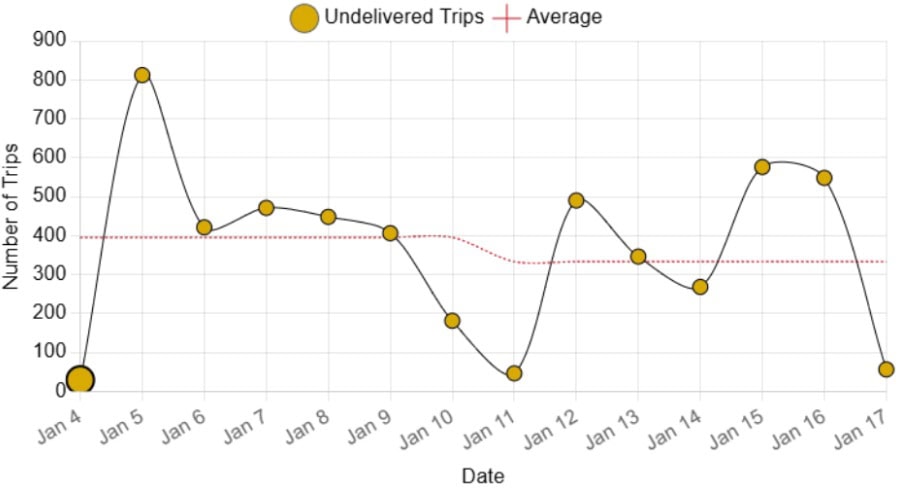
This is the number of undelivered bus trips throughout the whole bus network. Trips that are not able to be delivered will be shown in the Travel Planner and Transit app.
Reasons for Undelivered Trips
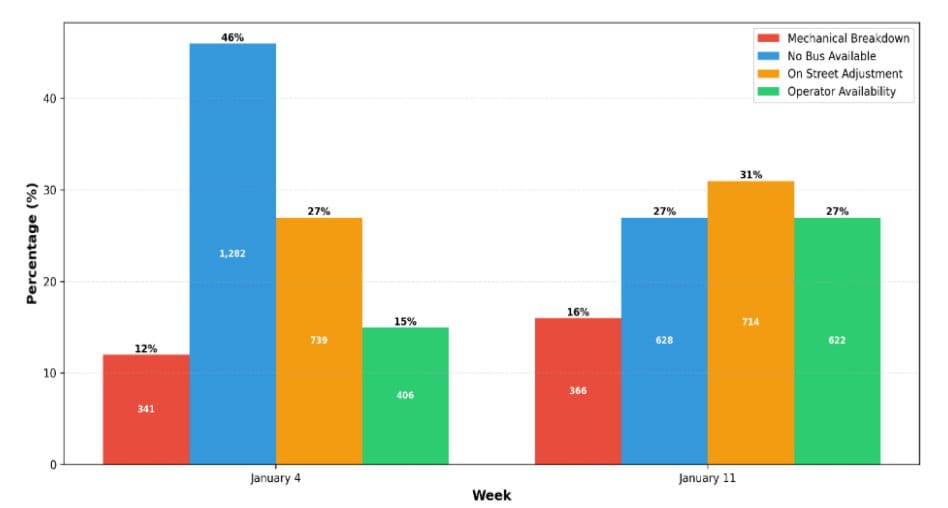
Of the 2,330 trips undelivered, the above chart shows the top reasons a trip could not be delivered. The numbers in the column are the actual trips canceled. The following reasons are possible:
• Mechanical breakdown: any type of mechanical issue that prevented a trip from being delivered.
• No bus available: insufficient number of buses for the service required preventing a trip from being delivered.
• On street adjustment: operational incidents that impact the ability of trips to be delivered. This includes things like traffic, accidents or customer incidents.
• Operator Availability: trips not able to be delivered due to an operator not being available for service.
Fleet Health
There were 498 buses available for service on the average weekday. On average, 500 buses are required for service every weekday, this is a temporary decrease from 520 buses.
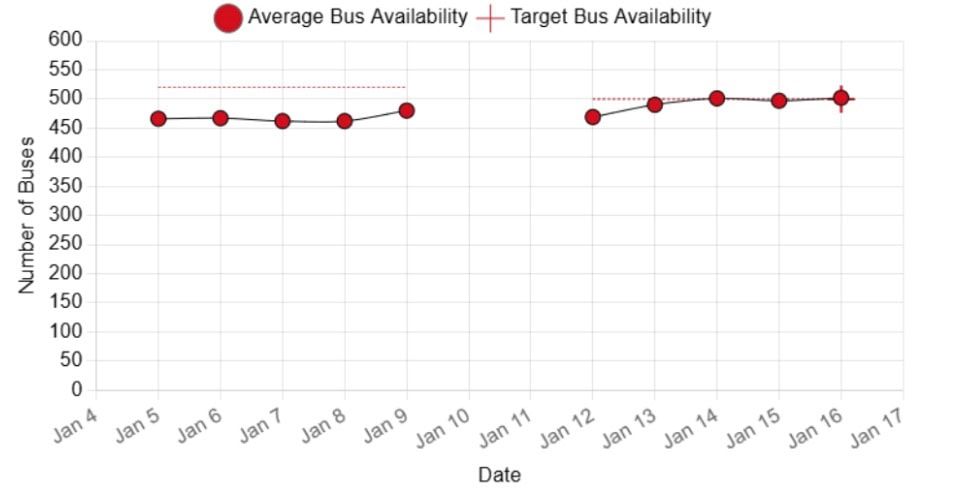
Bus fleet availability is a measure of how many buses are available to deliver service to customers. The number of buses available for service and service requirements fluctuates every day for various reasons including the number of scheduled trips changing or additional maintenance work being done.
Electric Bus Procurement
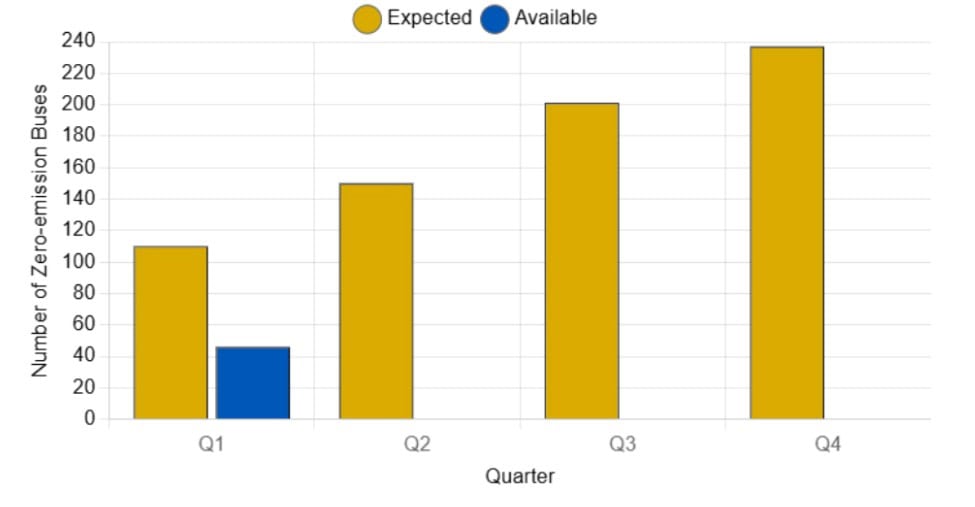
Currently, it is forecasted that 110 buses will be delivered by the end of Q1. There are 41 electric buses currently available for service