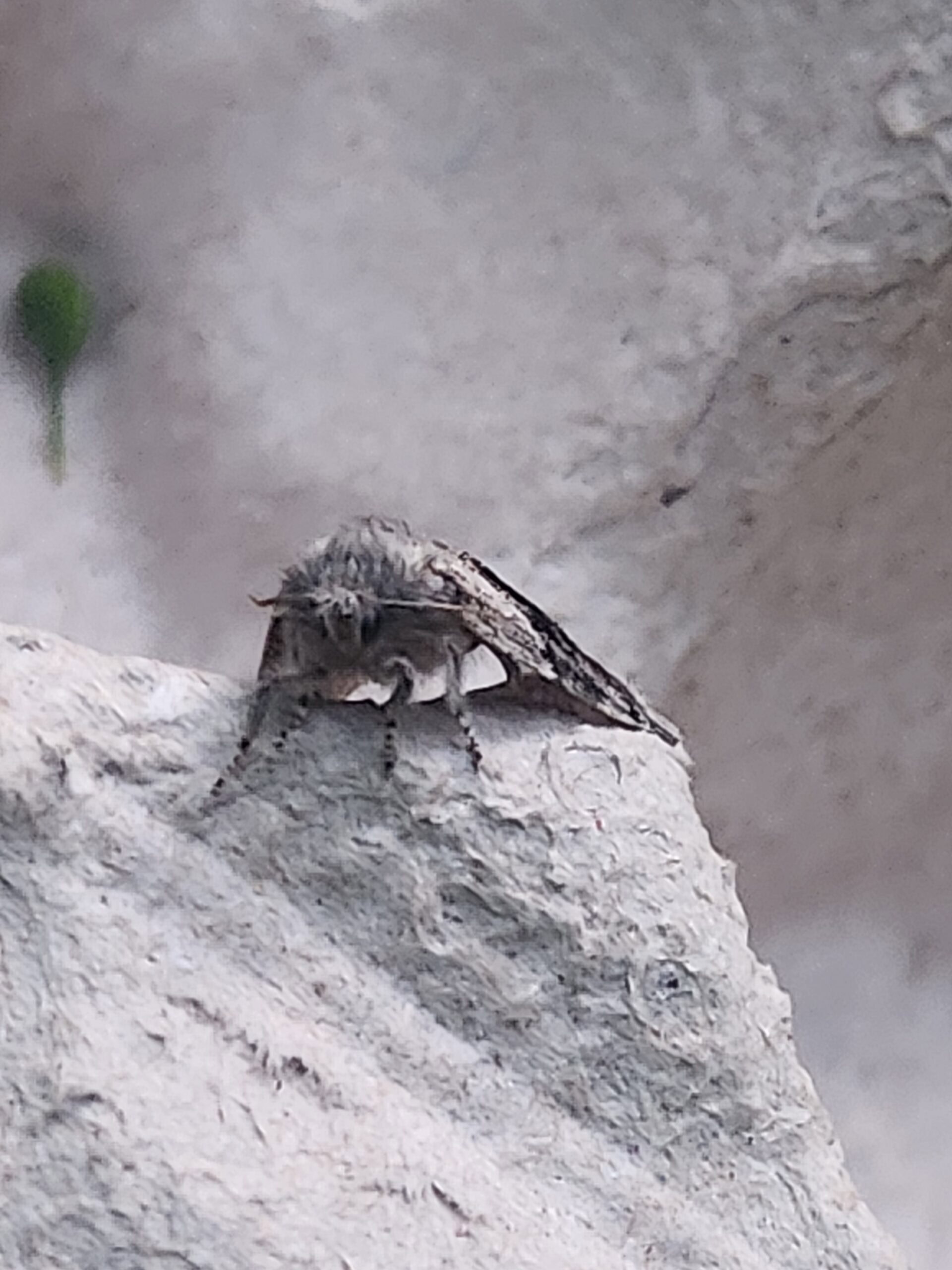
At the start of August, an intriguing email arrived in my mailbox from City of Ottawa Forestry staff.
Subject: For Your Awareness – Upcoming Carleton University Research
I’m writing to let you know about an upcoming citywide research study that Carleton University will be conducting in several wards across Ottawa to assess the benefits of urban greening initiatives by surveying bird and insect populations in forested areas.
As part of the study, researchers will deploy a non-lethal moth trap at the following park in Ward 6:
Location Ladybirds Park – 65 Sirocco Crescent
Study Dates August 7–17, 2026
September 5–15, 2026
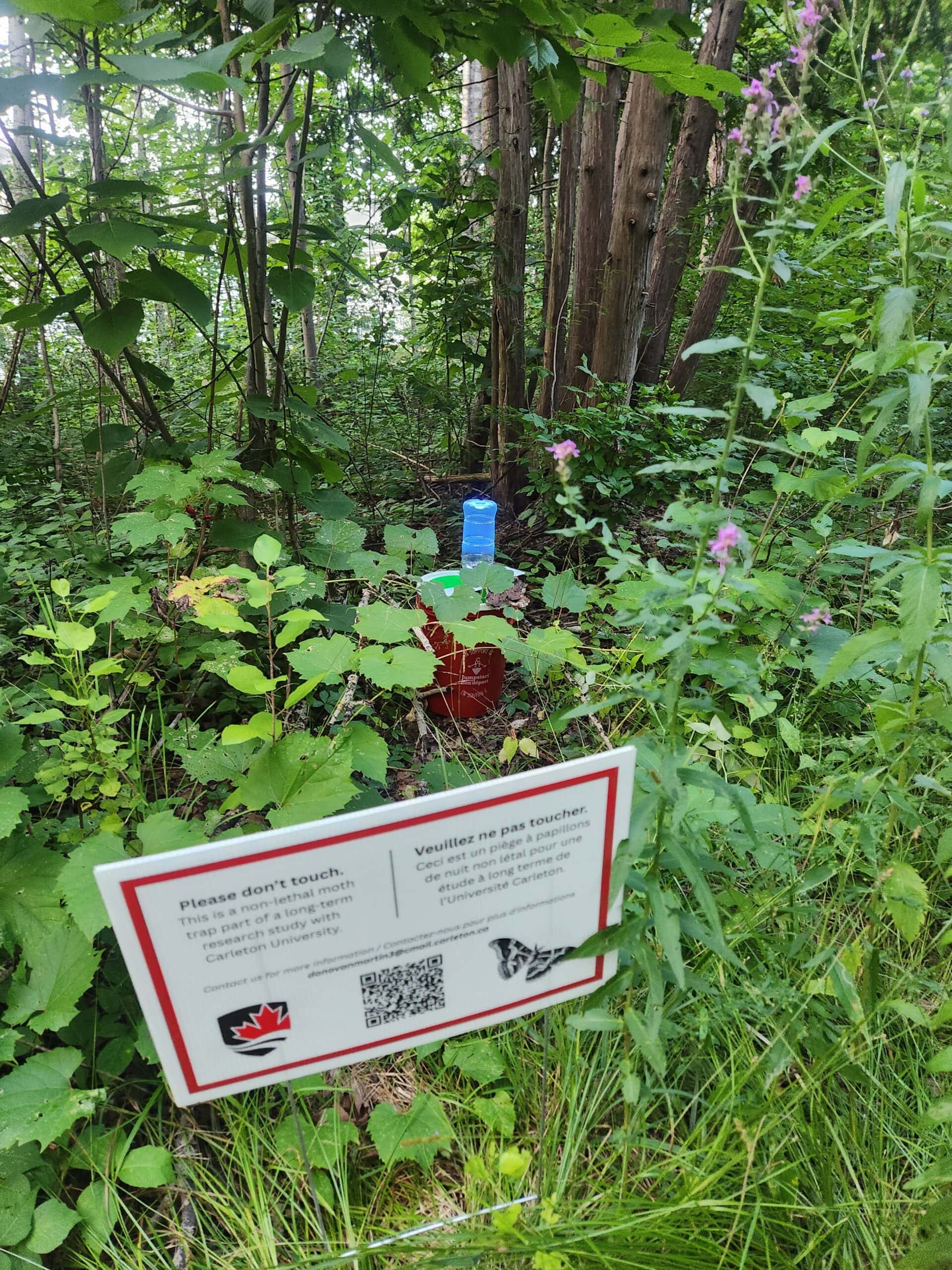
The traps will be set at dusk and collected shortly after dawn, outside of the parks’ general operating hours. They will be placed within forested areas and are not expected to disrupt residents. Informational signs will be installed beside each trap, including a brief description of the study and a QR code that links to more information.
The traps are completely non-lethal. Moths remain alive throughout the process and are gently released after identification and data collection. No vegetation, infrastructure, or public access areas will be disturbed.
Each trap consists of: A 20 W UV black light
A funnel and bucket collection chamber
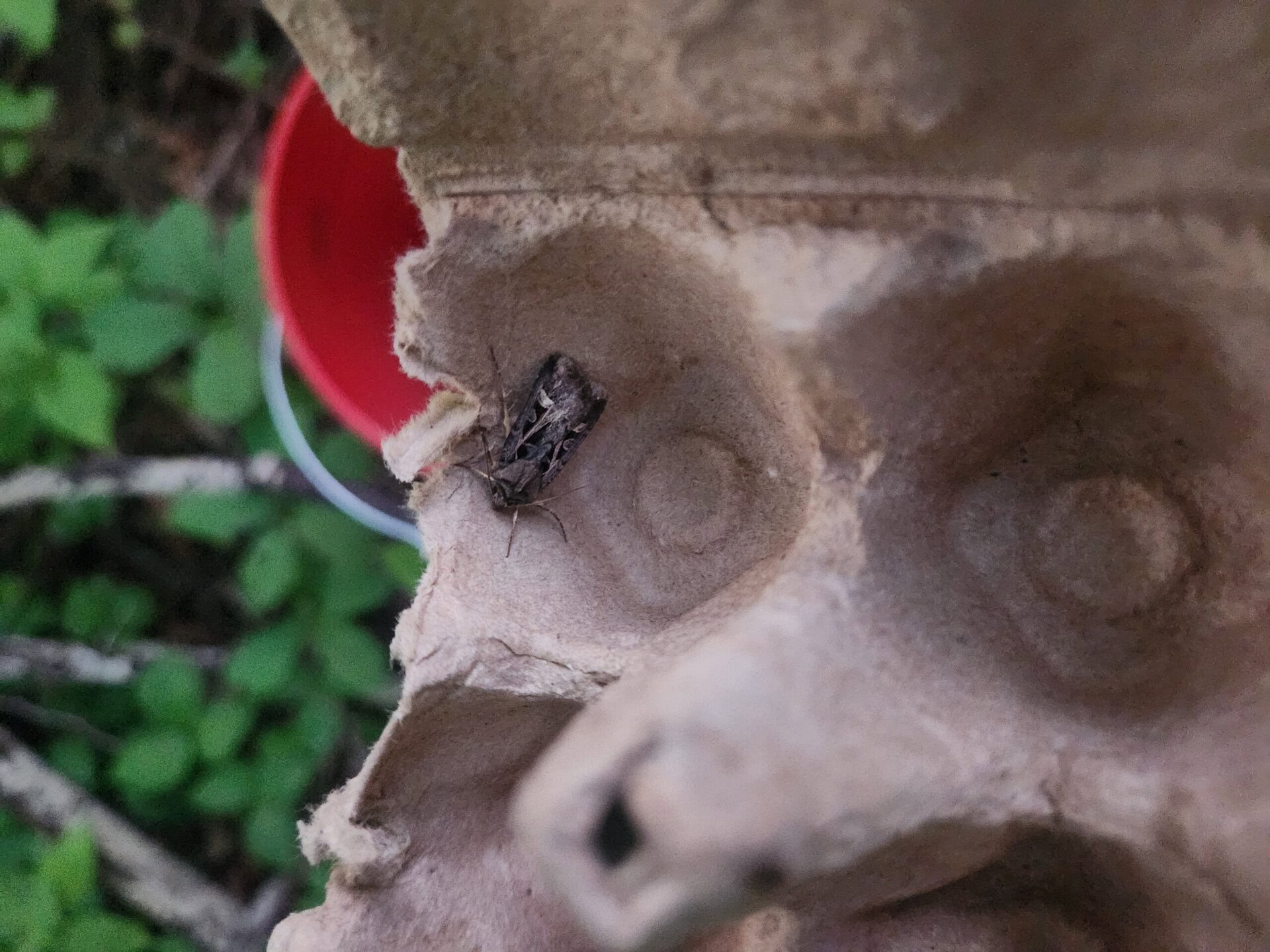
Egg cartons that provide resting surfaces for the moths
A battery
A weather-resistant bilingual label with project contact information
Forestry Services is pleased to support this research initiative and wanted to ensure your office is aware of the study in case you receive any questions or comments from residents. If you have any questions or if your office receives inquiries about the research, please feel free to direct them to the lead researcher, Donovan Martin…
Sounds interesting! I don’t know a lot about moths, but I do know they are an important part of the food chain. So I reached out to Donovan, and asked if he could tell me more about the work. He sent back a note and some photos, shared here with his permission.
Hi Glen,
Thank you so much for your email! I’m a researcher with Biodiversity Conservation Solutions lab at Carleton University. The purpose of my research is to see the effect of urban forests on moth and butterfly (lepidoptera) populations!
Ladybirds Park is classified as a mature forest, with several trees older than 10 years of age. Mature forest parks are compared to younger forest parks with trees younger than 10 and open parks which are primarily fields.
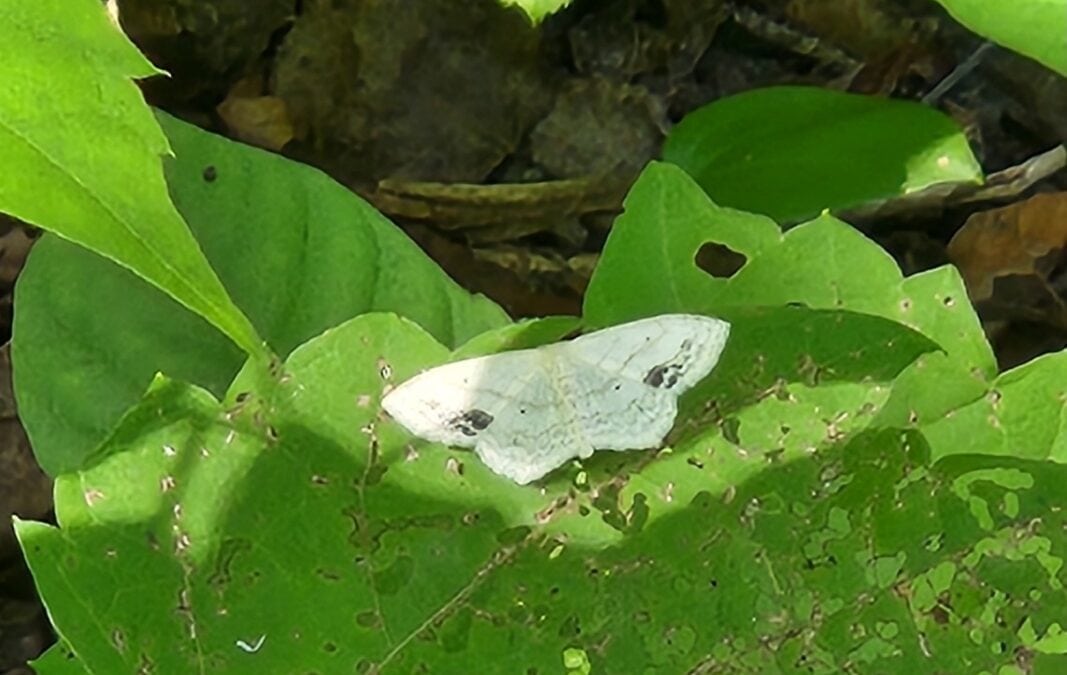
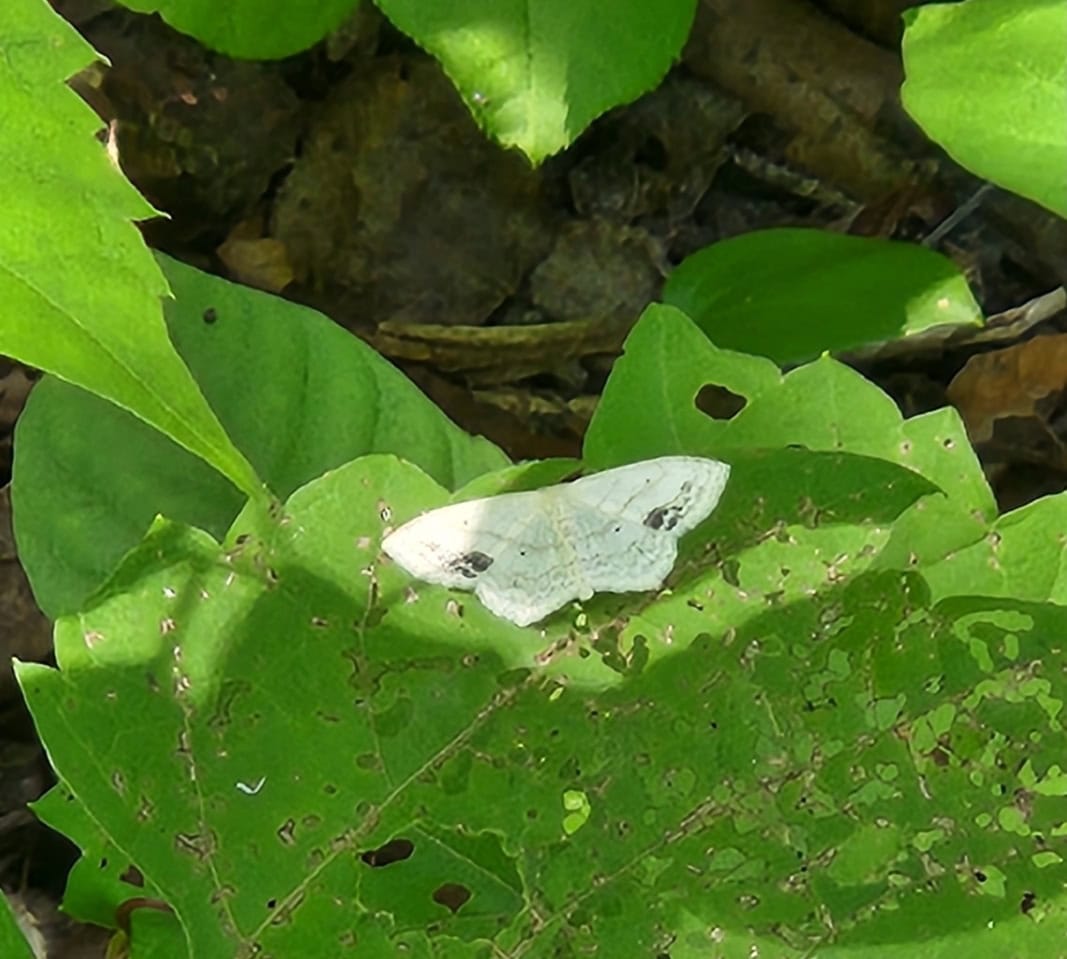
By day, I do Pollard walks at City of Ottawa parks, where, with a butterfly net, I look around and try to count and identify specimens I see. Below is a Large lace-border moth I found in Ladybirds.
At night, I place moth traps. A UV light is attached to a bucket full of egg cartons. The moths fly through the funnel and rest when the sunrises. I place the traps at sundown and pick them up at sunrise.
A Master’s dart
A Common gluphisia moth.
All my experimentation is non-lethal, catch-and-release.
Au début d’août, un courriel intrigant du personnel des Services forestiers de la Ville d’Ottawa est arrivé dans ma boîte de réception.
Objet : Pour votre information – Prochaine étude de recherche de l’Université Carleton
Je vous écris pour vous informer d’une étude de recherche à l’échelle de la ville que l’Université Carleton mènera sous peu dans plusieurs quartiers d’Ottawa afin d’évaluer les bienfaits des initiatives d’écologisation urbaine en recensant les populations d’oiseaux et d’insectes dans les terrains boisés.
Dans le cadre de cette étude, les chercheurs déploieront un piège à papillons de nuit non létal dans le parc suivant du quartier 6 :
Dates de l’étude Du 7 au 17 août 2026
Du 5 au 15 septembre 2026
Les pièges seront installés au crépuscule et récupérés peu après l’aube, en dehors des heures d’ouverture générales des parcs. Ils seront placés dans des terrains boisés et ne devraient pas perturber les résidentes et les résidents. Des panneaux d’information seront installés à côté de chaque piège, comprenant une brève description de l’étude et un code QR menant à plus de renseignements.
Les pièges sont totalement non létaux. Les papillons de nuit restent vivants tout au long du processus et sont remis en liberté avec précaution après l’identification et la collecte de données. Aucune végétation, infrastructure ou zone d’accès public ne sera perturbée.
Chaque piège se compose des éléments suivants : Une lampe à lumière noire UV de 20 W
Une chambre de collecte à entonnoir et à seau
Des boîtes à œufs servant de surfaces de repos pour les papillons de nuit
Une pile
Une étiquette bilingue résistant aux intempéries indiquant les coordonnées des responsables du projet
Les Services forestiers sont heureux d’appuyer cette initiative de recherche et tenaient à s’assurer que votre bureau soit informé de l’étude au cas où vous recevriez des questions ou des commentaires de résidentes ou de résidents. Si vous avez des questions ou si votre bureau reçoit des demandes de renseignements au sujet de cette étude de recherche, n’hésitez pas à les transmettre au chercheur principal, Donovan Martin.
Ça semble captivant! Je ne m’y connais pas beaucoup en papillons de nuit, mais je sais qu’ils constituent un maillon important de la chaîne alimentaire. J’ai donc communiqué avec Donovan pour lui demander s’il pouvait m’en dire plus sur ses travaux. Il m’a répondu par une note accompagnée de quelques photos, partagées ici avec son autorisation.
Bonjour Glen,
Merci beaucoup pour votre courriel! Je suis chercheur au laboratoire Biodiversity Conservation Solutions de l’Université Carleton. L’objectif de ma recherche est d’évaluer l’effet de la forêt urbaine sur les populations de papillons de nuit et de jour (lépidoptères)!
Le parc Ladybirds est classé comme une forêt mature, et comprend plusieurs arbres âgés de plus de 10 ans. Les parcs à forêt mature sont comparés à des parcs à forêt plus jeune dont les arbres ont moins de 10 ans, ainsi qu’à des parcs ouverts qui se composent principalement de terrains dégagés.
Le jour, j’effectue des relevés selon la méthode Pollard dans les parcs de la Ville d’Ottawa où, muni d’un filet à papillons, j’observe les environs pour tenter de dénombrer et d’identifier les spécimens que je vois. Vous trouverez ci-dessous un spécimen de Scopula limboundata que j’ai trouvé au parc Ladybirds.
La nuit, j’installe des pièges à papillons de nuit. Une lampe UV est fixée à un seau rempli de boîtes à œufs. Les papillons de nuit entrent par l’entonnoir et se reposent jusqu’au lever du soleil. Je pose les pièges au coucher du soleil et je viens les récupérer au lever du soleil.
Un spécimen de Feltia herilis
Un spécimen de Gluphisia septentrionis
Toute mon expérimentation repose sur une méthode non létale de capture et remise en liberté.
Cordialement,
Donovan Martin, B. Sc.
Le laboratoire Biodiversity Conservation Solutions de l’Université Carleton semble vraiment passionnant. Voici quelques-uns des projets en cours :
J’ai hâte de connaître les résultats de la surveillance des papillons de nuit et des recherches menées au parc Ladybirds ainsi que dans d’autres endroits à Ottawa.